What to Expect During a Professional Tree Felling Service in Bromham, Bedfordshire
Trees provide shade, improve the appearance of gardens and support local wildlife. However, there are occasions when a tree becomes damaged, diseased, unstable or unsuitable for its surroundings, making removal the most appropriate option. Professional tree felling helps manage these situations through careful planning, controlled cutting and safe removal.
For property owners in Bromham, Bedfordshire, understanding what happens during a professional tree felling service can make the process more straightforward. From the initial assessment to clearing the site, knowing what to expect helps you prepare your property and understand how experienced tree surgeons approach the work.
What Is Professional Tree Felling?
Tree felling is the process of cutting down a tree in a planned and controlled manner. The method used depends on the tree’s height, condition, shape and position, as well as the space available around it.
Where there is sufficient clear space, a tree may be felled in a carefully selected direction. In gardens with nearby buildings, fences, sheds or other obstacles, sectional dismantling may be more appropriate. This involves removing the tree in smaller sections rather than bringing it down in one piece.
A professional assessment helps determine the most suitable method for the individual tree. The objective is to remove it in a controlled way while protecting people, property and the surrounding landscape.
Step 1: Initial Tree Assessment
Before any cutting begins, a tree surgeon assesses the tree and its surroundings. This is an essential stage because no two tree removal projects are exactly alike.
The assessment may consider:
- The tree’s height, trunk diameter and overall structure.
- Signs of disease, decay, cracks or dead branches.
- The condition of the trunk and visible roots.
- Nearby buildings, fences, garden features and access routes.
- Available space for lowering or moving sections of the tree.
This information helps establish the safest practical approach and identify any challenges that need to be addressed before work starts.
Step 2: Planning the Felling Method
Once the assessment is complete, the tree surgeon determines how the tree should be removed. The method depends largely on the available working space and the tree’s condition.
Where an open area provides sufficient clearance, directional felling may be possible. However, where a tree stands close to a house, garage or boundary fence, sectional dismantling can offer greater control.
During sectional dismantling, branches and sections of the trunk are removed progressively. Depending on the circumstances, specialist rigging equipment may be used to lower heavier sections carefully rather than allowing them to fall freely.
Careful planning is particularly important in residential gardens in Bromham, Bedfordshire, where outdoor spaces can contain several features that need protecting.
Step 3: Preparing the Work Area
Before felling begins, the immediate work area is prepared to reduce the risk of accidents and damage. The tree surgeon identifies the working zone and ensures that people remain clear of the area during operations.
Garden furniture, plant pots and other movable items may need to be relocated. Vehicles may also need to be moved away from the work area where appropriate.
The team will consider access for equipment, the movement of timber and the safest location for handling branches. Preparing the site properly helps the work proceed efficiently and reduces the likelihood of unnecessary disruption.
Step 4: Carrying Out the Tree Felling
The actual removal process depends on the chosen method.
For a tree that can be felled in one controlled movement, the tree surgeon makes carefully planned cuts to guide its direction of fall. The surrounding area must provide enough space for the tree to come down safely.
Where space is restricted, the tree may be dismantled from the top down. Branches are removed first, followed by manageable sections of the trunk. Some sections may be lowered using specialist equipment to maintain control throughout the process.
Tree felling requires experience, suitable equipment and an understanding of how a tree responds to cutting. Attempting this work without the necessary skills can create serious risks, particularly when dealing with large trees or those with structural defects.
Step 5: Removing Branches and Timber
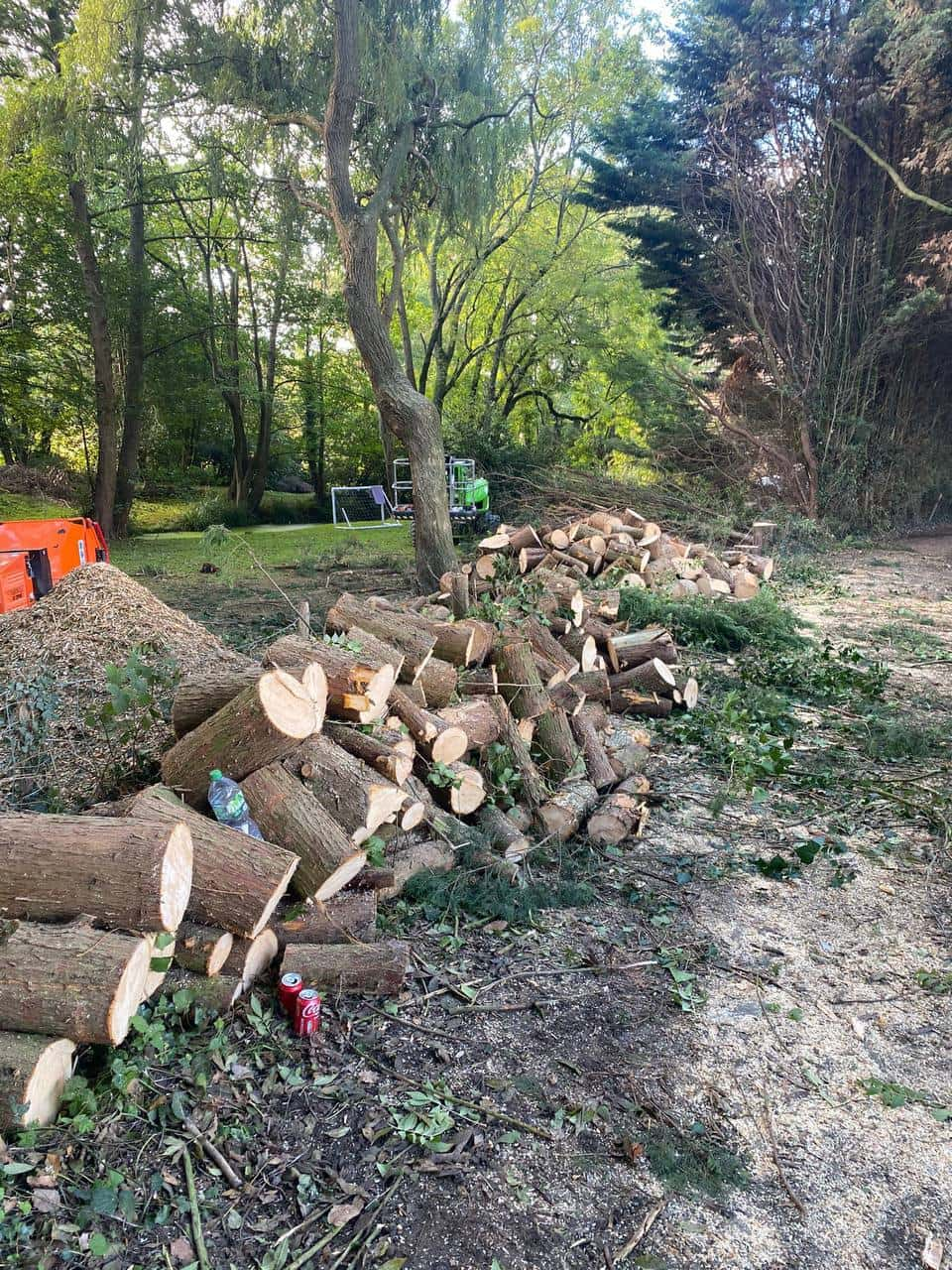
Once the tree has been felled or dismantled, the resulting branches and timber are gathered and processed according to the agreed service arrangements.
Branches may be cut into smaller pieces to make handling easier, while larger sections of trunk can be separated into manageable lengths. Keeping the work area organised helps prevent debris from obstructing access and allows the remaining tasks to be completed more effectively.
If you have particular preferences regarding the retention of suitable logs or the removal of timber, it is worth discussing these before work begins.
Step 6: Stump Removal and Site Clearance
Removing the visible tree does not automatically remove the stump. The stump and remaining roots may be left in place or dealt with separately, depending on the requirements of the property.
Stump grinding is one option where the aim is to reduce the stump below ground level. This can help make the area easier to maintain or prepare for future landscaping. The suitability of this method depends on the stump’s size, position and accessibility.
After the work, the site should be left in the condition agreed with the customer. Confirming whether stump treatment, timber removal and general clearance are included helps avoid misunderstandings.
Why Choose a Professional Tree Felling Service?
Tree felling involves more than simply cutting through a trunk. Trees can have hidden decay, uneven weight distribution or branches that behave unpredictably when disturbed. Nearby structures and limited access can also make removal more complicated.
A professional tree surgeon can evaluate these factors, select an appropriate removal method and use suitable equipment to manage the work. This helps protect surrounding property, maintain control over the removal process and reduce avoidable disruption.
Professional advice can also help determine whether complete removal is genuinely necessary or whether another form of tree surgery may address the problem.
Conclusion
A professional tree felling service typically involves an initial assessment, careful planning, preparation of the work area, controlled removal, timber handling and any agreed stump or clearance work. Each stage contributes to a more organised process and helps manage the risks associated with removing a tree.
If you have a damaged, diseased or unsuitable tree on your property, Bromham Tree Surgeons can assess the situation and explain the available options. Contact the team to discuss your tree care requirements in Bromham, Bedfordshire, and arrange a professional assessment.
Call us on: 01234 860 699
Click here to find out more about Bromham Tree Surgeons
Click here to complete our contact form and see how we can help with your tree care needs.